
Good News Friday
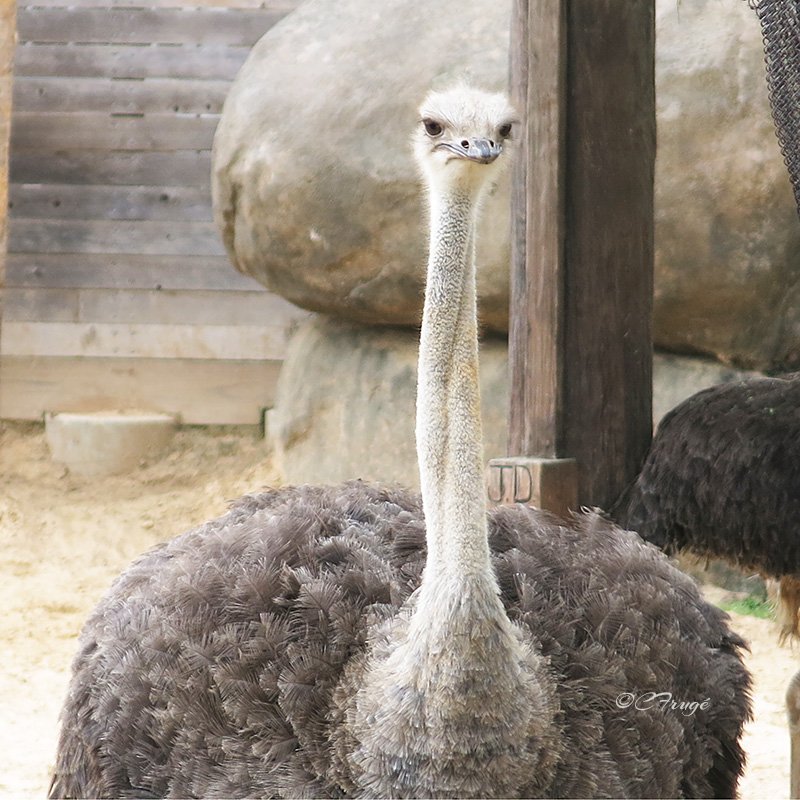
Contrary to myth, ostriches do not bury their heads in the sand.
Headline on Google News: 1985 Classic, Originally a Box Office Flop, Ranked Among ‘Best Western Movies of All Time’
“Lawrence Kasdan’s timeless Western film earned the kudos it’s getting today.” [1]
Finally, my favorite Western recognized as an enduring great!
Besides its stellar ensemble cast, the story, the script by Lawrence Kasdan, the film entertains as it highlights the ever ongoing war between good and evil. (Kasdan also co-wrote the screenplay for four of the Star Wars movies.)
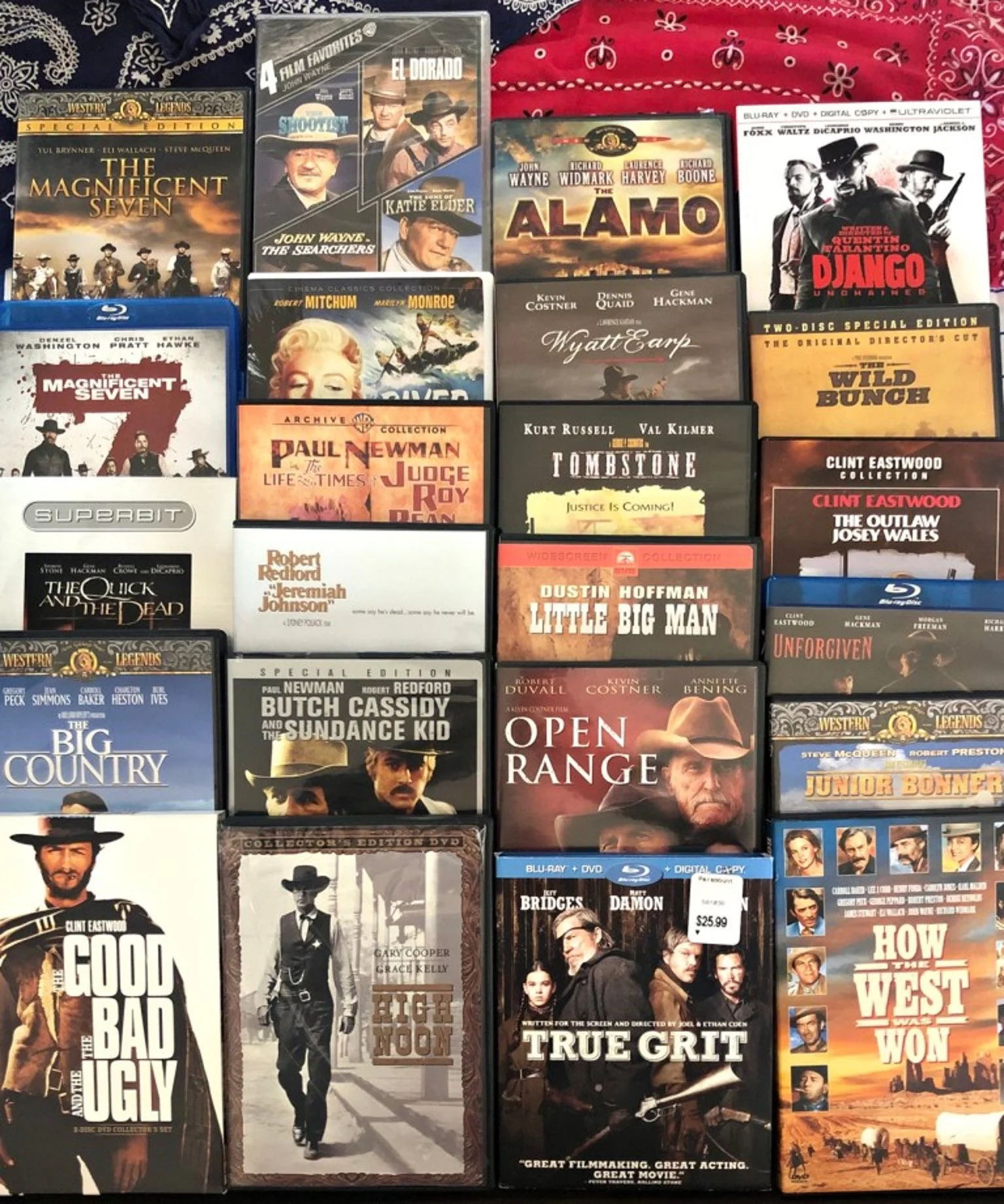
some Westerns from my movie library
What about Westerns?
It could be argued that all the great contemporary movie storytellers derive their action themes and lessons of good versus evil from early Western films.
“It would be impossible to come up with a unanimous No. 1, with thousands of films and a century to span, but is there anyone who loves Westerns who doesn’t love The Searchers? John Ford may have written the language of the movie Western in Stagecoach, but with The Searchers he demonstrated a mastery of visual storytelling to craft a film that is the cinematic equivalent of the Mona Lisa. Unheralded in its time, The Searchers has become an icon for those who take their movies seriously. Francis Ford Coppola, George Lucas, Steven Spielberg, and Martin Scorsese rank it among their most profound cinematic influences.”
Not only did the 1939 movie Stagecoach launch the career of John Wayne, director JOHN FORD set the course of Western movies for decades to come, and the trajectory for films set far into the future.
George Lucas, director, filmmaker, creator of the Star Wars and Indiana Jones movies understands the impact of movies on the culture.
“I’ve always tried to be aware of what I say in my films, because all of us who make motion pictures are teachers — teachers with very loud voices.”
GEORGE LUCAS
The impact and influence of films reaches beyond the realm of books, which are privately consumed, speaking loudly to audiences across generations and oceans.
Earlier Versions of American Westerns
Wholesome Saturday matinées entertained as well as extended the academic and cultural classroom to the movie theater.
Western movies sorted the heroes from the outlaws the way Harry Potter stories sorted students into houses.
Right away, viewers distinguish the good guys from bad guys. The white hats and the black hats. Bank robbers wore masks!
What Westerns got right made up for what they got wrong.
Movies entertain, inform, and in some ways record an idealized version of history, painted in broad strokes.
Portraying ordinary men as heroes made ordinary men believe they could be a hero. Save the day. Save somebody’s day, anyway.
George Lucas created characters that mirrored the movie Western to give young people a picture of what the fight is all about. Values.
“There was no modern mythology to give kids a sense of values, to give them a strong mythological fantasy life. Westerns were the last of that genre for Americans. Nothing was being done for young people with real psychological underpinnings.”
GEORGE LUCAS
Why do I love Silverado?
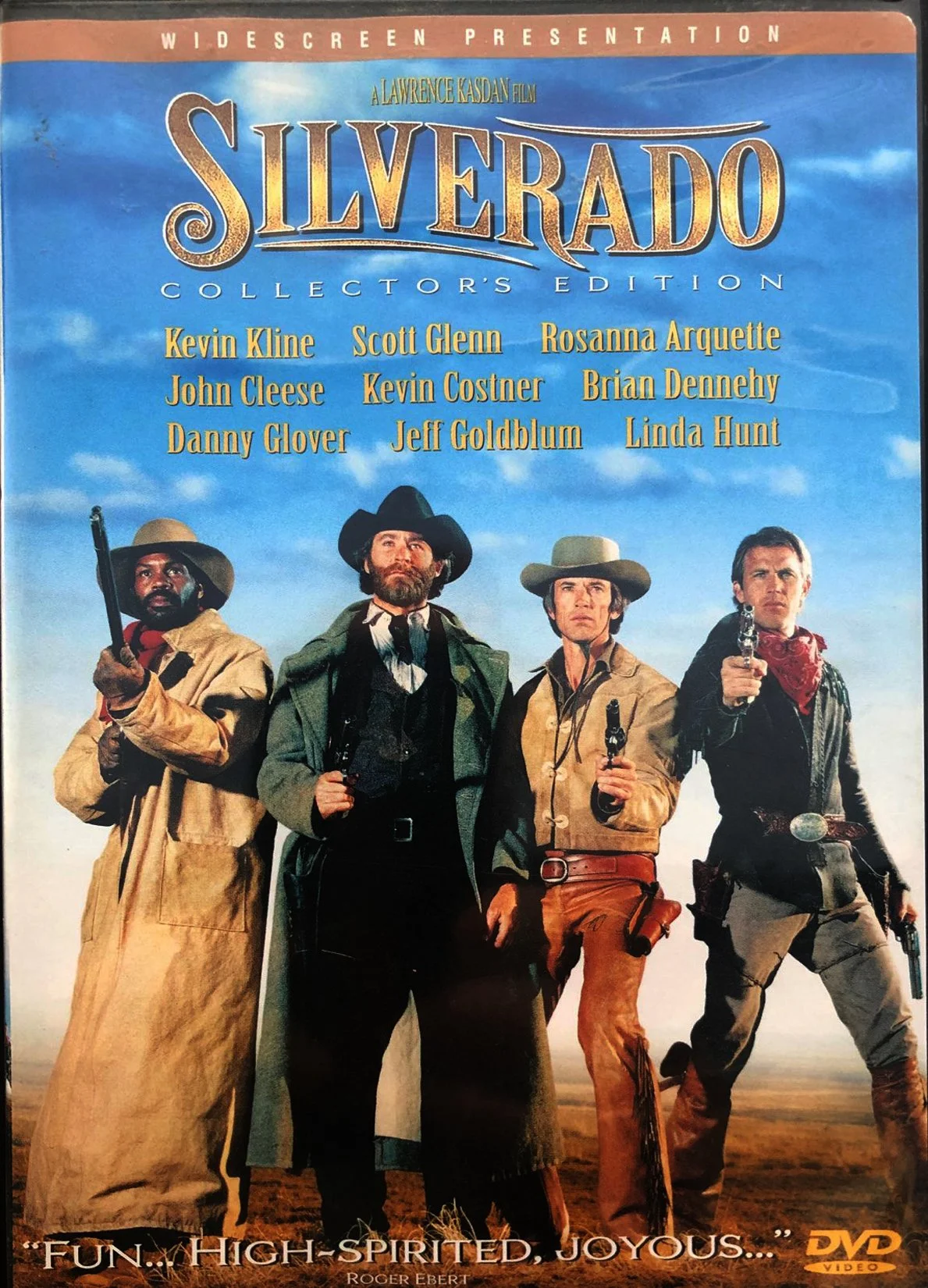
This 1985 Lawrence Kasdan film feels like an homage to the earlier Westerns I watched as a kid.
My family quotes lines from this movie, including what Paden said.
“I always figure you might as well approach life like everybody’s your friend or nobody is; don’t make much difference.”
Or Mal saying,
“Now, I don’t wanna kill you, and you don’t wanna be dead.”
I used that line with my kids when they needed to clean their rooms.
It was years before I saw the actual theatrical release of Silverado––this now classic Western. A friend had videotaped from HBO this movie and given our family a copy. Even our friend didn’t realize that he had missed the movie’s illuminating, motive-explaining beginning until we purchased a VHS copy years later.
Now, I laugh about the missing scene every time we watch the Silverado 25th anniversary DVD.
The movie’s beginning was important because story-telling needs to reveal the characters backstory and motivations in order for the story to make sense.
A stellar ensemble cast with movie chemistry, Silverado was Kevin Costner’s breakout movie role. This Western tells the story of four unlikely companions who end up saving a town from a greedy landowner and the corrupt lawmen he hires.
Pick your side. That’s what Westerns make clear.
Western stories elevate human virtue. Or else show how bad guys eventually have to pay for their crimes.
Evil corrupts and spreads.
Do bad choices catch up with evil doers?
Yet often, a character with a shady past chooses to fight evil on behalf of others. The plot in The Magnificent Seven brings together a disparate band of scoundrels who unite to save a village tormented by evil bandits. Both the original 1960 version starring Yul Brenner and Eli Wallach, and the recent remake in 2016, starring Denzel Washington and Chris Pratt do justice to a story about justice.
Movies Where Character Counts
The stories best remembered have characters audiences cared about.
Beneath the surface appearance, values guide a character’s choices.
Characters who fight evil value peace.
Characters who work hard value contributing to life.
Characters who stand up to injustice value protecting people who cannot protect themselves.
Each character in Westerns had flaws of course. Audiences love them in spite of their imperfections because they cared about other people.
Yet the tidy, predictable save-the-day storyline in American Westerns eventually ceased to entertain.
The stereotypes and tropes played out.
Westerns threw in a losing hand.
Aided by technical special effects, movie Westerns moved to outer space.
What American Westerns Got Wrong
The tipping point between wholesome entertainment and crude Tarantino-style realism has happened in my lifetime.
Having seen all but 4 of the 100 Best Westerns list from 2002 issue of Cowboys and Indians, a list that includes movies and television series, what strikes me now is how few of those films could be viewed today without an attack decrying political incorrectness.
Even the term Indian has come under attack.
Wipe out the history. Wipe out the word. Wipe out the ideas behind the words and stories.
Remove from the collective memory anything that may offend anyone.
Ever.
What I cannot comprehend is how removing landmarks of history and words describing times, and places, and people, advances the story.
Why can’t people view historic artifacts as reminders of how far we have come? Why can’t we learn that we never want to repeat the mistakes of the past, much less elevate the crimes of the present?
The earliest Westerns portrayed the hero as good and the outlaws as bad. Only, in real life, no one is either all good or all bad.
The 1953 movie Shane, stars Alan Ladd as a gunslinger who wants to move away from his past. Instead, he faces the malevolent cattle baron (played by Jack Palance) who wants to devour the land of homesteaders. Shane is the only man big enough to stand up to him.
Each of us enters a story already in progress. We need history to help us move forward. We need history and its stories to help us avoid historic mistakes.
“We have to have stories. It takes a story to make a story. It takes a story of mythic dimensions; one which belongs to everybody; one in which everybody is able to recognize the hand of God and imagine its descent upon himself.”
Westerns take a snapshot––provide a story footnote––where if you and I will watch, imagine ourselves in those roles and circumstances, we can see ourselves in the bigger picture.
History itself is story.
History, when it tells the truth, includes The Good, the Bad, and the Ugly.
And seeing ourselves in a moving picture takes more courage and guts than pretending something didn’t happen or that evil isn’t real.

