
Games People Play
If Life itself were like a MONOPOLY board, Life would have 40 spaces to land on. And passing Go would be like having birthdays.
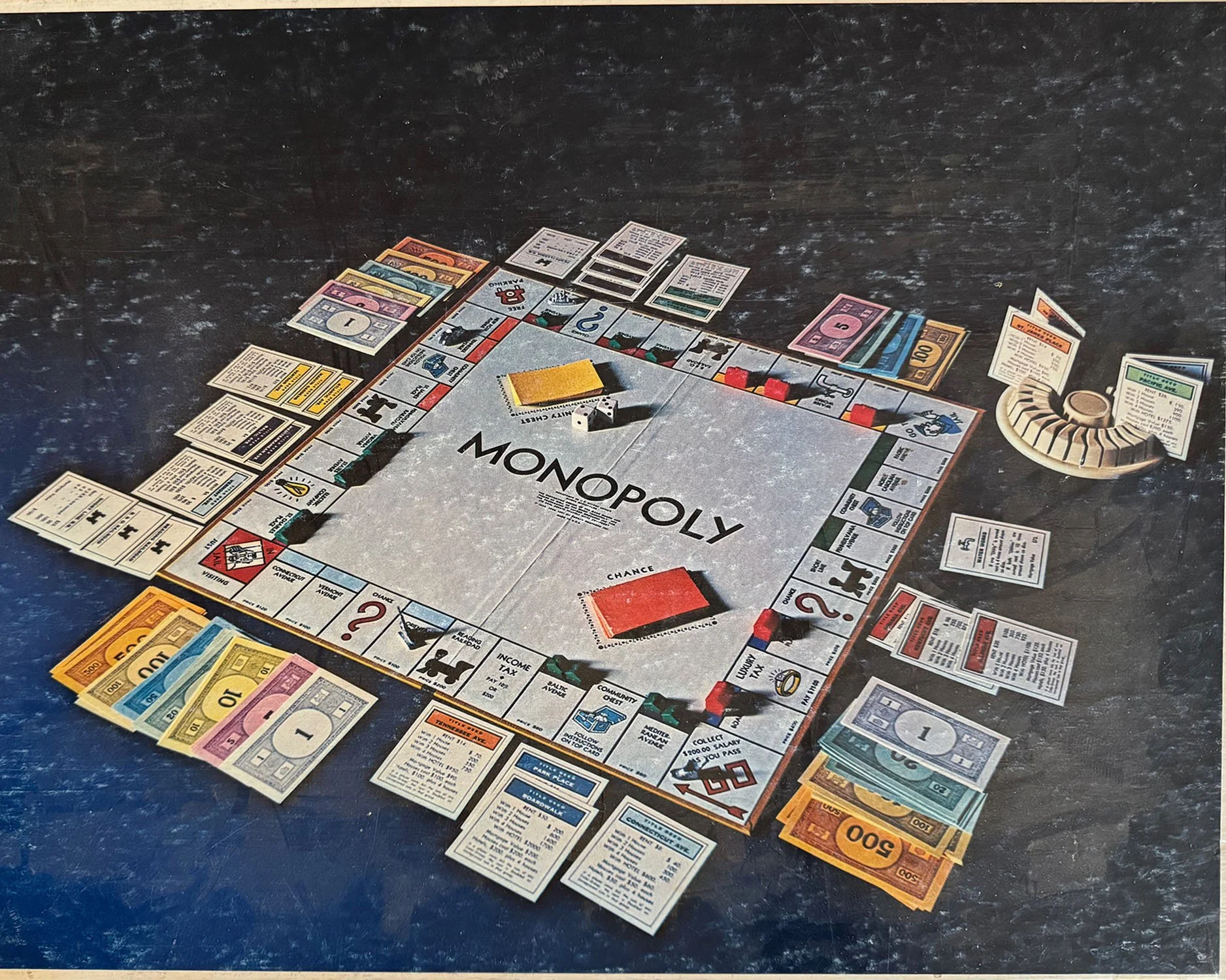
Picture from a Monopoly box.
Boy, was I surprised when I opened my Bible to find Hebrews 11 has 40 verses!
Those 40 verses in Hebrews 11 describe what faith looks like in the lives of the people, both named and unnamed, who faced situations that required the exercise of their personal faith in God. These brief references to the larger, more detailed stories in the Bible help me identify what faith might look like in my life too.
In any case, Life itself does bring each of us around and around––circles inside circles: birthdays … anniversaries … Thanksgiving … Christmas, then around to GO at New Years. Move forward, again.
However we view and track Life on our own game-playing board, the choices we make will shape our lives.
We make our choices and our choices make us.
“This I recall to my mind, therefore have I hope. It is of the Lord’s mercies that we are not consumed, because his compassions fail not. They are new every morning: great is thy faithfulness.”
Dreams and Dreamers
Relating the game of Monopoly to Hebrews chapter 11 came to me in a dream. Rather, during that not quite awake state, where visions of the flat iron, thimble, and the horse danced in my head.
As soon as I got out of bed, I started reading about Monopoly. Monopoly’s 40 squares include 24 properties, 4 railroads, 2 utilities, 3 CHANCE and 3 COMMUNITY CHEST, Luxury Tax and Income Tax, In Jail and Just Visiting, Go to Jail, Free Parking, and GO.
MONOPOLY––
Best, highest selling, and most popular board game ever, its origin in the early 20th century, is derived from “The Landlord’s Game” in the UK. Parker Brothers put their game on the marker in 1935, during the Depression.

What makes Monopoly perpetually evergreen is its relation to life. To stay in the game, Players must keep passing GO. At the end of the game, all playing pieces go back in the box.
The more times a person passes GO, players pay attention to what options remain open, look ahead to where each player hopes to land, and learn what places to avoid.
Once in the game, players’ options and opportunities are affected by the other players. Choose your playing piece first, but you don’t always get to choose who you play with. Competition can get dicey.
While some players may seem especially lucky––buying up properties, collecting rent, building houses and hotels––anyone could end up broke.
House Rules, when my family plays, we put money in Free Parking from Pay the Bank and Luxury Tax, whatever $$$ doesn’t go to another person. Lucky players who land on Free Parking stay in the game longer.
GO: Where every player starts
GO marks the starting point of the game. Similarly, GO marks the starting point of each of our lives.
In the game of Monopoly, you and I come around the board, each time collecting $200. for passing GO. Building our fortunes, amassing property, trying to win the game by ending up with the most. Tokens of success: money, property, and bragging rights.
And somehow, a simplistic view of life, creeps into our values, affecting our definition and estimate of success and failure. Contemporary culture insists that man is evolving, adapting, shaping whatever future he can imagine and secure for himself.
The Bible says the foolish man builds his house, his life, on the shifting sands of time without regard to eternity.
Coincidentally, I read a short story that ends with an oblique reference to the poem Ozymandias.
“I met a traveller from an antique land,
Who said—‘Two vast and trunkless legs of stone
Stand in the desert. . . . Near them, on the sand,
Half sunk a shattered visage lies, whose frown,
And wrinkled lip, and sneer of cold command,
Tell that its sculptor well those passions read
Which yet survive, stamped on these lifeless things,
The hand that mocked them, and the heart that fed;
And on the pedestal, these words appear:
‘My name is Ozymandias, King of Kings;
Look on my Works, ye Mighty, and despair!’
Nothing beside remains. Round the decay
Of that colossal Wreck, boundless and bare
The lone and level sands stretch far away.”
Read this article for an interesting analysis of the poem, Ozymandias. https://www.poetryfoundation.org/articles/69503/percy-bysshe-shelley-ozymandias
Note the comment, “Time renders fame hollow: it counterposes to the ruler’s proud sentence* a devastated vista, the trackless sands of Egypt.”
*[‘My name is Ozymandias, king of kings./Look on my works, ye mighty, and despair!’]
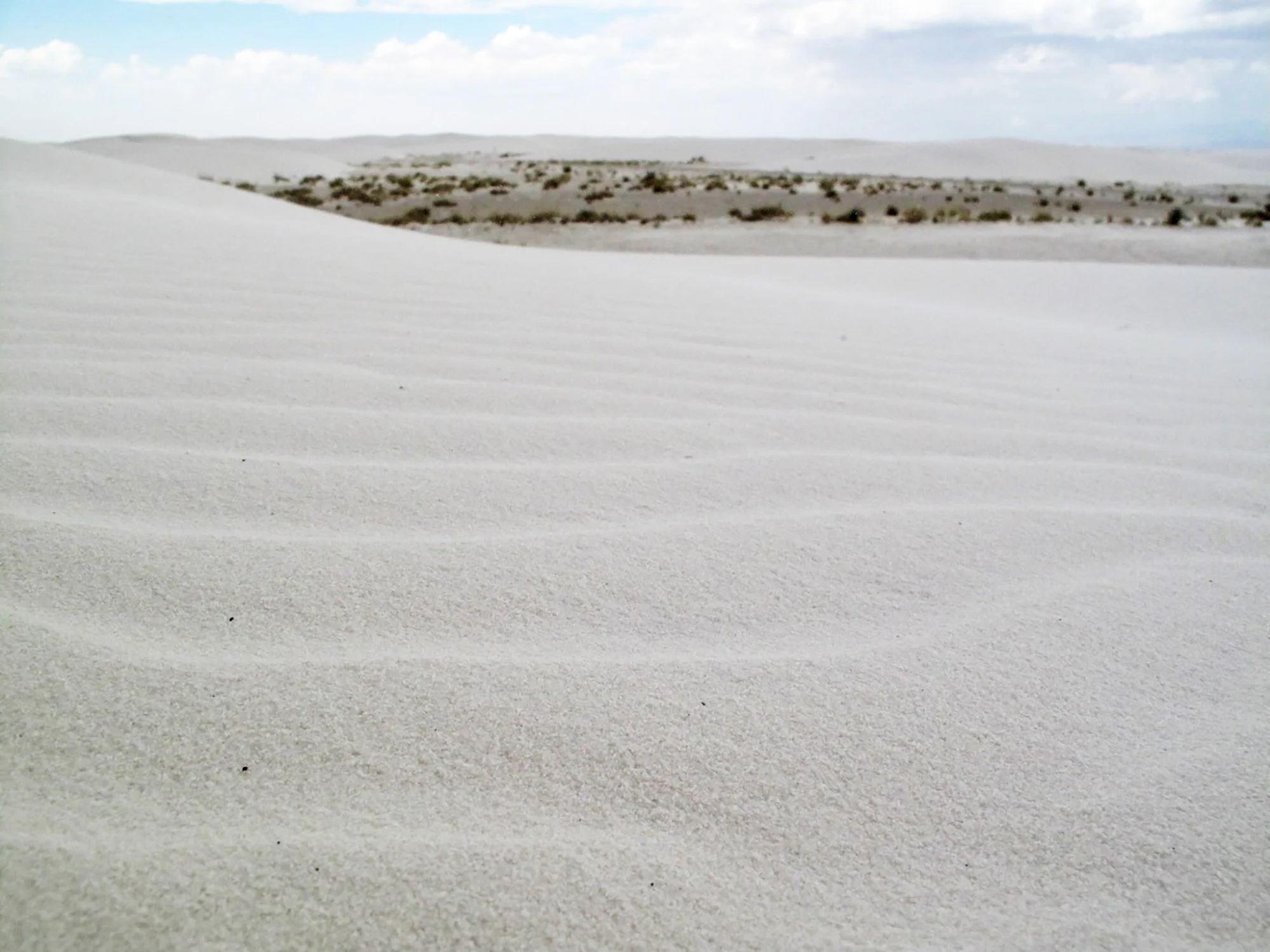
Trackless sands in White Sands, New Mexico––July 30, 2008
The Measure of Man
Hebrews 11, also called “The Hall of Faith,” consolidates the story of those who had lived by faith.
From righteous Abel to martyred saints, a “Who’s Who of the Old Testament,” God who had created each person, set their lives in motion.
He then commended them for decisive moments when during their lives each displayed very personal faith in Him.
Hebrews 11 notes how these people trusted God even when it looked as if all was lost.
When the game ends
How many times a person passes GO cannot measure the significance of a person’s life. Neither can the World declare winners by how much money or property someone temporarily “owns,” or a lottery that keeps someone playing the game longer than others.
When all playing pieces go back in the box, God has the last word on every person’s life. That word is Jesus.
“Jesus Christ is the same, yesterday, today and forever.” Hebrews 13:8

