
Who was G.K. Chesterton?
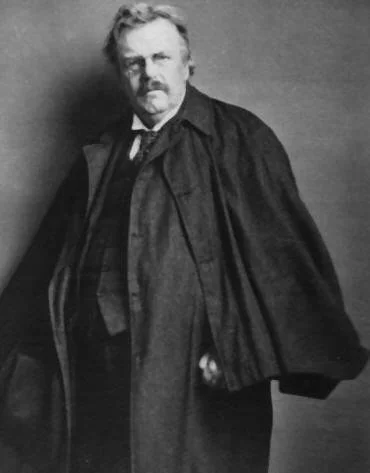
After seeing the movie The Odyssey last week, I came across this quote by G.K. Chesterton. The words struck and stuck.
“The Iliad is only great because all life is a battle, The Odyssey because all life is a journey, The Book of Job because all life is a riddle.”
I awoke this morning to the question, Who was G.K. Chesterton? I have quoted from his writings with little awareness of context. I wanted to know more, and my search has led me to share.
Let Me Introduce You
Here’s a link to The Society of G.K. Chesterton where a brief bio describes Chesterton as “the best writer of the 20th century.” He is long gone to his reward (1874-1936).
https://www.chesterton.org/who-is-this-guy/
Read and see if you agree.
“…and why haven’t I heard of him?”
The bio says it’s because as a writer, G.K. Chesterton can’t be pigeonholed. Nobody knows what to do with him so they ignore him.
My daughter has a funny way of describing people she reads and quotes. “He’s my friend, but I’m not his friend.”
He or She, either way, readers feel possessive, protective of their literary sources, as if these people are someone they meet on occasion for coffee.
I’ve been quoting for years, referring to truth that resonates from the writings of G. K. Chesterton. I don’t know him. I cannot know him any more than I can know Shakespeare or Jane Austen. But his words continue with unmistakeable insight and relevance.
“And what did he [Chesterton] argue for? What was it he defended? He defended “the common man” and common sense. He defended the poor. He defended the family. He defended beauty. And he defended Christianity and the Catholic Faith. These don’t play well in the classroom, in the media, or in the public arena. And that is probably why he is neglected. The modern world prefers writers who are snobs, who have exotic and bizarre ideas, who glorify decadence, who scoff at Christianity, who deny the dignity of the poor, and who think freedom means no responsibility.”
Prolific Writer
G.K. wrote fiction as well as non-fiction books, essays, and even poetry.
The popular television series Father Brown, aired on PBS (Public Broadcasting System), is based on G. K. Chesterton’s novels.
“People wonder why the novel is the most popular form of literature; people wonder why it is read more than books of science or books of metaphysics. The reason is very simple; it is merely that the novel is more true than they are. But life is always a novel. . . our existence is still a story.” ––Heretics
Who Did Chesterton Influence?
Among his contemporaries, Chesterton often publicly debated “celebrated intellectuals,” arguing for Christianity and against atheism. With quick wit and humor, Chesterton won both the battles and the respect of his “enemies.”
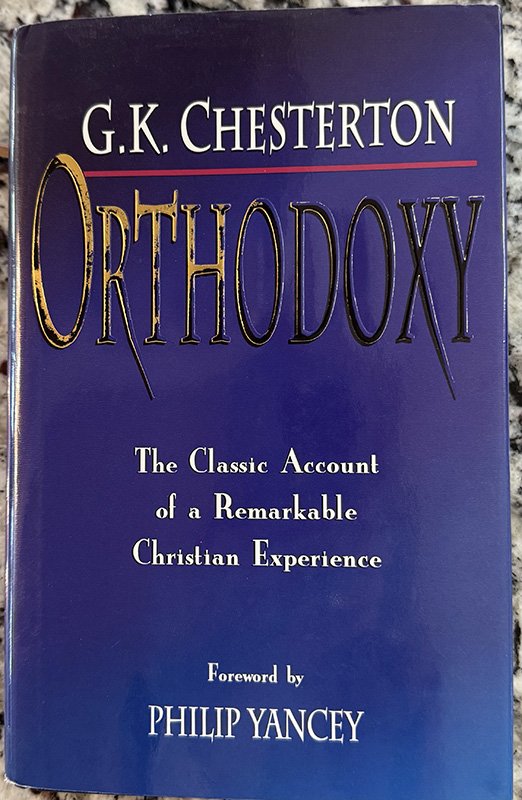
The stream from Chesterton’s writings flowed to C.S. Lewis, who reading Chesterton’s book The Everlasting Man turned from unbelief to faith in Jesus Christ. Countless numbers of people have continued to read and respond to Chesterton’s remarkable and influential writings.
A writer for The Atlantic wrote that Chesterton was a genius. “Touched once by the live wire of his thought, you don’t forget it . . . he cracks jokes like thunder. His message, a steady illumination beaming and clanging through every lens and facet of his creativity, was really very straightforward: get on your knees, Modern Man, and praise God.”
“I would maintain that thanks are the highest form of thought; and that gratitude is happiness doubled by wonder.”
George Bernard Shaw said: “The world is not thankful enough for Chesterton.”

If you like what you read here, please share https://www.footnotes2stories.com/home
